

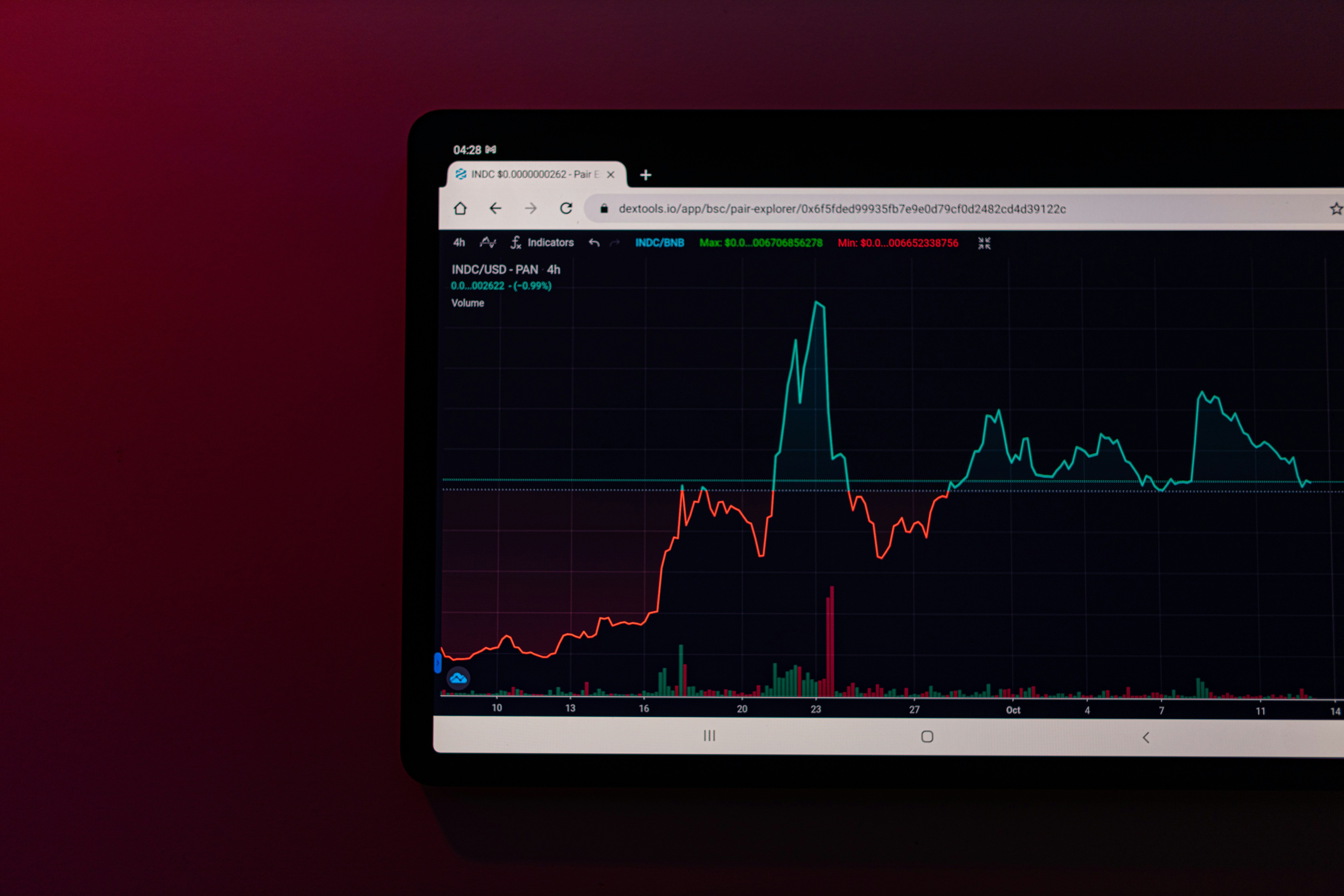
Day trading looks simple from the outside; you see the charts, fast trades, and testimonies of traders with their big wins. But in reality, those wins take a lot of hard work, consistency, discipline, and risk control to excel in this field. Most people ask the question, Is day trading hard? Well, in this guide, we break it down clearly and honestly: why day trading feels hard, skills you must develop for a constant win in the market, mistakes that make it harder, and how long it realistically takes to succeed as a day trader. Whether you trade forex, crypto, stocks, or day trade penny stocks, the challenges are the same, and this article gives you a full, structured understanding.
Is Day Trading Hard?
Day trading seems hard because it demands a rare combination of skills, including fast decision-making, strict emotional control, and consistency under pressure. Successful day traders must be adept at accurately reading the market, managing losses without succumbing to fear, and rigorously sticking to a trading plan, even during losing streaks. The challenge lies in balancing psychology, technical skill, and risk management, and this is where most traders ultimately fail.
Why Day Trading Feels Hard
Day trading is a style of trading where positions are opened and closed within the same day, sometimes within minutes or seconds. And, it feels hard because the market moves fast. The forex markets can move 10–50 pips in seconds. And for a beginner, this could be overwhelming; professionals already react with a plan.
For some, psychological pitfalls like fear, greed, FOMO (Fear of Missing Out), and revenge trading are common factors that undermine successful trading. If you frequently succumb to these issues, you demonstrate a lack of discipline by increasing lot size after a loss, moving stop losses, entering trades impulsively, and prematurely closing winning positions. These are not technical failures but rather failures of mental and emotional control that make day trading seem hard.
Even for professionals, a lack of risk management strategies can make this a hard terrain to navigate. Most new traders risk too much, so it starts to feel like gambling and not trading anymore. The reasonable percentage traders typically risk is between 0.5% to 1% of their capital per trade, whereas some risk much higher percentages, sometimes 10%, 20%, or even 50% on a single trade, leading to a series of losses that makes day trading feel harder.
Most of the time, day trading is difficult because you are not competing against random retail traders. Instead, you are up against sophisticated entities like high-frequency trading bots, institutional algorithms, smart money, market makers, and professional traders with decades of experience. These experienced players exploit the liquidity that retail traders unknowingly provide. This dynamic is a primary reason why the market frequently triggers a retail trader's stop loss before finally moving in the anticipated direction.
Related Read: Is Day Trading Gambling or a Skill?
Skills You Must Build to Make Day Trading Easier

Now that you know what could make day trading hard, you need to know the right skills that make it easier. When you build the right skillset, not when you find the perfect indicator, is what will make this an easier venture. Here are the kinds of skills you need to build as one who wants to conquer the day trading territory:
Technical Analysis Skills
Day trading requires a high degree of technical mastery and discipline. You cannot just 'guess' the market's direction, but be armed with an understanding of the technical aspect to be able to trade profitably. A trader must understand:
- Market structure: This is the framework of the market, defining the trend. A trader must be able to identify higher highs and higher lows in an uptrend (bullish structure) and lower highs and lower lows in a downtrend (bearish structure). Understanding when structure shifts or breaks, is the primary signal for potential reversals or continuations.
- Liquidity zones: Price does not move randomly; it is drawn to pools of money. Liquidity zones are areas where a large volume of pending orders (stop losses and limit orders) reside, typically above old highs (buy-side liquidity) or below old lows (sell-side liquidity). Traders must understand that institutional players actively seek to "sweep" this liquidity to fill their own large orders, often leading to sharp movements
- Order blocks: These are specific, identifiable candlestick formations that represent the footprint of institutional accumulation or distribution. An Order Block is often the last opposing candle before a strong, impulsive move that breaks market structure. They serve as high-probability areas for price to return to and react from.
- Supply & demand: This is the core economic principle applied to charting. Demand zones are areas where buyers were aggressive, act as support, and Supply zones, which are areas where sellers were aggressive, act as resistance. These zones are more reliable than simple horizontal lines, as they account for the imbalance created by large orders.
- Candlestick behavior: Beyond merely recognizing common patterns (like Doji or Hammer), a professional trader understands the narrative of each candle, the struggle between buyers and sellers, the volume traded, and the rejection of price. This involves reading wick length, body size, and the candle's position relative to key structure points.
- ATR volatility: The ATR indicator is crucial for risk management and trade planning. It measures the typical range of price movement over a given period, informing the trader about the current volatility of the asset. A high ATR suggests larger potential profits and losses, influencing the appropriate size for stop-loss orders and position sizing.
- Breaker blocks: Similar to Order Blocks, but formed when price sweeps a liquidity high/low (often trapping retail traders) and then aggressively reverses to break the recent market structure. The Breaker Block is the failure of a supposed support/resistance level, and price will often re-test this zone before continuing the breakout.
- Fair Value Gaps (FVG): This is a gap in price delivery, typically a three-candle pattern where the high of the first candle and the low of the third candle do not overlap. These gaps represent an aggressive, one-sided move, leaving the market "unbalanced." Price has a high statistical tendency to return and "fill" or "mitigate" the FVG before continuing its initial trajectory, offering high-precision entry and exit points.
Technical analysis is NOT optional, but it is the backbone of day trading. A serious trader must go beyond basic charting and develop a profound understanding of these important concepts for profitable trading.
Risk Management Skills
Mastering risk management is paramount for any aspiring or practicing day trader. These disciplines are not merely suggestions; they are the bedrock that ensures your capital survives the inevitable learning curve and market volatility. Without stringent adherence to these principles, even a profitable trading strategy can be rendered moot by catastrophic losses.
To manage risk effectively, you must be able to master:
- Stop loss placement: A stop loss is a predetermined level at which a trade is automatically exited to prevent further losses. Stop loss must be placed logically, typically, beyond a main support or resistance level, not just based on a random percentage. If it's too close, normal market fluctuations will unfairly stop your trade. If it's too far, you risk losing too much money. Smart stop-loss placement is the main way to prevent one bad trade from erasing lots of past profits.
- Position Sizing: Position sizing is about controlling risk mathematically. It tells you exactly how much to trade (shares, contracts, etc.) based on how much you are willing to risk. The core rule is the "1% Rule," meaning you should never risk more than 1% of your total trading money on any single trade. Using this consistently stops a few bad trades from destroying your account.
- Risk–Reward Ratios (R: R): The R: R ratio is key to making money over time. It compares the possible profit (Reward) to the possible loss (Risk) on a trade. You should aim for an R: R of 1:2 or 1:3, meaning you try to gain two or three times what you risk. This means you can still be profitable even if you lose more trades than you win. It's about taking smart risks, not just winning every time.
- Drawdown Control: A drawdown is the peak-to-trough decline during a specific period. Controlling drawdowns is crucial for emotional stability and capital preservation. This involves setting daily, weekly, and monthly maximum loss limits. For instance, a trader might decide to stop trading for the day if their capital falls by 2% or 3%. These limits act as a necessary protective brake, preventing "revenge trading" or spiraling losses that can occur when a trader is emotionally compromised after a bad trade.
- Avoiding Over-trading: Over-trading is the psychological trap of trading too frequently, often without clear setups or in poor market conditions. It is driven by the fear of missing out (FOMO) or the compulsive need to recover a loss. Over-trading exponentially increases commission costs, slippage, and, critically, your risk exposure. A disciplined trader recognizes that the quality of setups trumps the quantity of trades. Waiting patiently for the highest-probability opportunities is a hallmark of professional trading.
Before day trading, commit to mastering stop loss placement, position sizing, risk–reward ratios, drawdown control, and avoiding over-trading is what keeps your capital alive long enough to learn and master the other complexities of market analysis, strategy execution, and psychological endurance. Without capital, the learning process ends abruptly.
Psychological Strength
This is simple: every trader needs to train psychologically and prepare for the good and bad moments that come with day trading. Every trader needs patience, consistency, self-control, a neutral mindset, and lots of emotional discipline to win the race.
Strategy Mastery
Day trading becomes easier when you stick to proven strategies for at least 90–120 days and are consistent. A common pitfall for newcomers is "strategy hopping", switching trading methods frequently, sometimes weekly. This prevents a trader from truly understanding a strategy's nuances, its optimal market conditions, and how to properly manage risk within it.
Examples of strategies that traders might choose to focus on include:
- Liquidity sweep + order block entry: A concept often used in Smart Money Concepts (SMC), where a move is made to grab liquidity (stop losses) before reversing to trade from a specific price area known as an order block.
- VWAP bounce: Trading off the Volume-Weighted Average Price, using it as a dynamic support or resistance level where price is expected to "bounce" back.
- Break & retest: Waiting for price to decisively break through a significant level of support or resistance, then waiting for it to return and "retest" that level before continuing the move in the direction of the original break.
- Divergence with RSI or MACD: Identifying when the price action is moving in one direction while a momentum indicator like the Relative Strength Index (RSI) or Moving Average Convergence Divergence (MACD) is moving in the opposite direction (e.g., making lower highs), signaling a potential reversal.
- Scalping imbalances: Taking very short-term trades based on anomalies or gaps in the order flow, often visible on specialized charting tools.
By selecting one of these or a similar proven strategy and adhering to it rigidly for several months, beginners overcome the largest hurdle to consistency, ultimately making day trading a less daunting and more sustainable endeavor.
Related Read: Order Flow Trading: Mastering Footprint Charts, Delta, and CVD
Can Day Trading Be Easy?
Day trading, while not inherently "easy," becomes manageable, predictable, and profitable with the development of the right skills and discipline.
To make day trading easier, focus on these key practices:
- Master your strategy: Deeply understand your trading approach.
- Maintain consistency: Avoid frequently switching techniques.
- Prioritize risk management: Risk 1% or less of your capital per trade.
- Trade selectively: Only execute trades that match your established setups.
- Keep a trading journal: Document your trades for review and analysis.
- Trade objectively: Eliminate emotional decision-making.
- Normalize losses: Accept that losses are a regular and unavoidable part of trading.
How Long Does It Take to Become a Good Day Trader?
A realistic timeframe for becoming proficient in day trading is generally 6–18 months, provided you study consistently and practice seriously. If you set an unrealistic timeframe, such as 1–2 months, it often leads most beginners to quit due to premature expectations.
Is Day Trading Worth It?
Day trading is worthwhile for individuals who enjoy analysis, are patient, can manage their emotions, are capable of following a structured plan, and are willing to learn through challenging experiences. It is not a get-rich-quick scheme and is not worth pursuing if one is seeking quick money, fast results, a zero-stress environment, or a simple source of income, as day trading ultimately rewards the disciplined, not the emotional.
Final Thoughts
Is Day Trading Hard? Yes, day trading is hard, especially at the beginning. But it becomes easier when you stop looking for shortcuts and start focusing on skills.
With the right approach, day trading becomes structured, predictable, less emotional, more profitable, and easier to manage. Day trading isn't for everyone, but it is achievable for anyone willing to develop the required discipline, patience, and mastery.
Related Read: Penny Stocks to Buy Now: What to Look For and 5 Picks Worth Watching
Frequently Asked Questions
Do you need a lot of money to day trade?
No. You can start with:
- $100–$300 for forex/crypto
- $500–$1,000 for small stock
- $25,000 for US stock day trading (due to PDT rule)
The key is risk management, not the size of your account.
Is day trading gambling?
No, but it becomes gambling when you trade without a strategy, trade off your emotions, or when you have not mastered the skills needed to make profits.
Can anyone learn day trading?
Yes. As long as you are ready to master the skills and discipline required. To excel in the field
How many hours do day traders work?
Most day traders spend 1–3 hours actively trading and dedicate another 1–2 hours to crucial preparation activities like analyzing the market, journaling trades, and backtesting strategies. This division of time highlights that successful day trading relies more heavily on thorough preparation than on the moment-to-moment execution.
Follow Us On Social Media