6 Best AI Stock Trading Bots and Software
Looking for the best AI stock trading bots and software? Explore beginner-friendly AI trading tools, their pros and cons, and how to choose the right one.

AI trading tools are no longer niche. Today, traders use AI to scan markets faster, spot high-probability setups, automate execution, and reduce emotional mistakes.
But here's the key thing: not all AI trading bots are created equal. Some are powerful assistants. Others are just overhyped scripts with good marketing.
In this guide, I'll walk you through some of the best AI stock trading bots and software I've tested or researched deeply, what they do well, where they fall short, and who they're actually for.
Why Use AI Trading Bots?
AI trading bots work best as decision-support tools, not magic profit machines. When used correctly, they can:
- Scan thousands of stocks faster than any human
- Identify technical patterns consistently
- Remove emotional bias from execution
- Help you backtest and validate ideas
- Improve discipline and repeatability
If used incorrectly, they can also magnify losses just as quickly. That's why choosing the right tool and understanding its limits matters. Let's delve into the best AI trading bots and software you can use in 2026.
6 Best AI Stock Trading Bots and Software
We picked out the 6 best AI stock trading bots and software tools with strong features in 2026:
TrendSpider
Trendspider is an AI-powered chart analysis, backtesting, and automated scanning software. It is the best software for technical traders and is really good at pattern recognition.
This software leverages artificial intelligence and machine learning to streamline trading workflows. Its core strength lies in automating trendline detection, Fibonacci analysis, and multi-timeframe charting across stocks, forex, crypto, and futures. By replacing manual charting with automated recognition, traders gain a holistic market view and can build strategies with greater efficiency.
Key features include:
- Automated Trendlines & Patterns: Detects high-probability trendlines and Fibonacci levels automatically, with adjustable sensitivity.
- Multi-Timeframe Analysis: Offers layered insights across various time horizons for a deeper understanding of context.
- Integrated Backtesting: Built directly into the platform, allowing traders to evaluate win rates, profitability, and drawdowns without extra coding.
- Strategy Tester: Let users simply type in the rules they want to test; the system generates the code automatically, making it fast and user-friendly for beginners.
- AI Assistant: Enhances usability by handling coding tasks behind the scenes, enabling smooth setup in minutes.
By combining automated charting, robust backtesting, and AI-driven strategy testing, TrendSpider positions itself as one of the leading technical analysis platforms for traders seeking efficiency and precision. The platform is easy to navigate for anyone and is highly compatible with different browsers and devices.
Trade Ideas
Trade Ideas is one of the most advanced AI-powered alert and scanning platforms available today. It's built specifically for active day traders who want fast, actionable day signals, not just raw data.
The platform runs three proprietary AI engines that scan and backtest thousands of stocks in real time to surface only the highest-probability setups. After extensive testing, I can confidently say Trade Ideas is one of the closest things to a "black-box" AI trading system for retail traders, complete with automated scanning, AI trade signals, and even bot-driven execution.
Trade Ideas is ideal for active day traders who rely on real-time data, structured trading signals, and AI-driven strategies. If you trade multiple times per day and maintain an account over $25,000 (PDT rules), the platform's subscription cost can be easily justified by its signal quality and potential returns.
The platform runs three powerful AI strategies with over-the-top performance:
Holly AI: The original version of Trade Ideas' AI engine. Holly runs 70 different strategies across more than 8,000 stocks every day, meaning millions of backtests. Only strategies that show a win rate above 60% and a risk-reward ratio of at least 2:1 make it to the next day's trade list.
Holly 2.0: A more aggressive and updated version of the Holly bot. It focuses on higher-risk, higher-reward scenarios and, based on performance data, delivers some of the strongest annual returns, around 33% per year. Traders can choose Conservative, Moderate, or Aggressive modes depending on their appetite for volatility.
Holly Neo: The newest AI engine. Holly Neo specializes in real-time pattern recognition and short-term day-trading setups. It focuses on strategies such as pullback long, which involves spotting stocks that dip temporarily before attempting to push higher on strong volume, breakout long, focusing on identifying powerful moves through resistance levels, pullback short, which aims to catch short-term reversals during price retracements, and breakdown short, which seeks to capitalize on failed upward momentum when prices fall through support.
One feature that makes Trade Ideas a standout bot or software is the way it visually marks every buy and sell signal directly on the chart, which makes it incredibly easy to reverse-engineer the strategy behind each trade.
Trade Ideas is also one of the few platforms offering end-to-end automated stock trading. Through its Brokerage Plus tool, you can connect your eTrade or Interactive Brokers account and let your scans auto-execute trades. If you're a serious day trader looking for high-probability setups backed by real data and real performance, Trade Ideas is easily one of the most compelling AI tools available right now.
Capitalise.ai
Capitalise.ai lets you automate trading with simple text commands. It is a free tool with no hidden premium tiers or upsells. It's designed for beginners who want to automate trading without touching a single line of code. Instead of complex scripts, you simply type your strategy in plain English, like "Buy Tesla if RSI drops below 30", and the platform instantly converts it into executable trading rules.
The key features:
- A natural language strategy builder that feels intuitive.
- Automated trade execution through supported brokers.
- Backtesting on historical data to validate your ideas.
- Paper trading so you can practice without risking real money.
- Support for multiple asset classes, including stocks, ETFs, and forex.
Capitalise.ai is a suitable tool if you already have a clear trading strategy and just need a tool to execute it at zero cost. It won't magically make you a trading expert, but it does remove the hassle of manual execution.
This AI software does come with a few limitations. It isn't designed for advanced AI-driven analysis or for traders who need guidance on what to trade, and its broker connections are restricted to Interactive Brokers, FXCM, and a small handful of others. The AI itself is more basic compared to paid platforms, and because the service is currently free, there's some uncertainty about how long that pricing model will remain in place. It is best for DIY investors with defined strategies who want free automation.
TradingView
TradingView is one of the most versatile platforms for traders who want both power and flexibility. Trusted by over 20 million traders, it combines powerful charting, screeners, and market analytics across stocks, ETFs, forex, crypto, and indices.
Its biggest strength is flexibility. TradingView automatically detects hundreds of chart patterns, from classic formations to candlestick signals, and allows traders to backtest ideas using Pine Script.
Key features:
- Automated pattern recognition: TradingView scans charts in real time to detect patterns like double tops, triangles, flags, and candlestick formations. This saves time and helps traders spot setups they might otherwise miss.
- Custom indicator creation: With Pine Script, traders can build and customize their own indicators or use thousands of community-created scripts. This level of customization is hard to find on most platforms.
- Strategy backtesting via Pine Script: TradingView lets you test trading strategies against historical data to evaluate performance, win rate, and drawdowns before risking real money. While powerful, advanced backtesting does require some scripting knowledge.
- Webhook alerts that integrate with AI trading bots: Charts can trigger automated systems like SignalStack through webhook alerts, creating a smooth workflow between analysis and execution. This makes TradingView a strong foundation for AI-assisted or semi-automated trading.
- Support for a wide range of global brokers: TradingView integrates with a broad range of global brokers, allowing traders to analyze, signal, and execute trades within one ecosystem.
Beyond the tools, TradingView's community is unmatched. With over 100,000 shared scripts and millions of published trade ideas, it's the largest active trading community globally.
If you want a flexible, automation-friendly platform backed by real traders, not hype, TradingView remains one of the best choices available.
Tickeron
Tickeron is one of the most impressive AI-powered trading platforms I've tested, especially if you want clear probability models and pattern-based insights. The platform uses advanced chart-pattern recognition to scan stocks, ETFs, Forex, and even crypto in real time, and then generates trade ideas backed by success probabilities and AI confidence scores. Its free tier provides basic AI pattern searches, limited daily predictions, access to trading academy content, and paper trading for practice.
What makes Tickeron stand out is how it blends machine intelligence with insights from real traders; you can literally compare what the AI thinks versus what the community thinks. Additionally, the software scans charts for classic formations like head and shoulders or cup and handle, then generates predictions with confidence levels, though these are probabilities, not guarantees.
Although the pricing structure can feel complicated and chart customization is limited, Tickeron remains a highly sophisticated, easy-to-use tool that delivers meaningful trading insights. In my experience, it's absolutely worth trying, especially with the 14-day free trial and yearly plan discount. It's also worth noting that Tickeron is purely technical, with no fundamental analysis, and the interface can feel overwhelming for beginners.
With 45 streams of trade ideas, audited AI portfolios, and a powerful trend-prediction engine, it's a solid fit for day traders, swing traders, and even longer-term investors who want data-driven signals rather than guesswork. Overall, it's a strong option for technical traders who believe in chart patterns, but less suitable for fundamental investors or those just starting.
MetaTrader 5 Expert Advisors (EAs)
MetaTrader 5 (MT5) gives traders access to thousands of automated trading bots known as Expert Advisors (EAs). These bots range from simple rule-based systems to more complex algorithmic strategies, but their quality varies widely.
In reality, most MT5 EAs are not profitable without proper testing. Traders who see consistent results usually rely on custom-built or carefully vetted bots, not random downloads. Strong backtesting and optimization are essential.
MT5 EAs are most commonly used in the forex market, where automation is widespread, and liquidity is high. In stock trading, they're far less common and often less effective. Without strict risk controls and regular monitoring, EAs can amplify losses just as quickly as gains.
MT5 is best for experienced forex traders comfortable with automation, backtesting, and system optimization, and are willing to test and manage bots.
Cryptohopper
Crypto is one of the few markets where AI trading bots genuinely make sense. Prices move fast, volatility is extreme, and the market runs 24/7, which means opportunities and risks don't stop, and a lot can happen while you are sleeping. This is exactly where Cryptohopper shines.
Cryptohopper is a popular AI-powered crypto trading bot founded by Ruud and Pim Feltkamp and based in Amsterdam. It's designed to help traders automate their strategies, manage risk, and stay active in the market without being glued to charts all day. The platform integrates smoothly with major crypto exchanges and offers a user-friendly interface that works for both beginners and advanced traders.
One of Cryptohopper's biggest strengths is its flexibility. If you're new to crypto, you can start with simple strategies like Dollar-Cost Averaging (DCA), copy trading, or social trading, allowing you to learn by following more experienced traders. For more advanced users, the platform offers tools like arbitrage, paper trading, short selling, and strategy backtesting, making it suitable for serious algorithmic trading.
Cryptohopper also removes emotion from trading. Instead of panic-buying or panic-selling, the bot executes trades based on predefined rules and market conditions, something human traders often struggle with during volatile periods.
Key Features:
- Automated Trading Bots: Trade automatically using Cryptohopper's AI or copy strategies from other traders.
- Portfolio Management: This bot allows you to connect multiple exchange accounts and manage everything from one dashboard.
- Trailing Features: Automatically buy or sell when the price direction changes.
- Dollar-Cost Averaging (DCA): Reduce risk by averaging down positions during pullbacks.
- Arbitrage Tools: This allows you to take advantage of price differences across exchanges.
- Short Selling: With short selling, you can hedge against sudden market drops.
- Triggers & Alerts: You can set up the bot to respond instantly to market changes with automated actions.
- Backtesting & Paper Trading: This feature allows you to test strategies before risking real money.
- Marketplace: Access pre-built bot templates, strategies, and third-party trading signals, no coding required.
Pricing: Using this bot is free, but for more advanced features, paid plans go from $24 to $107 per month
Social Trading: Cryptohopper's marketplace is a major advantage. You can download ready-made bot templates, subscribe to trading signals from professional analysts, or combine multiple indicators into advanced strategies. This makes it possible to trade like an expert without needing deep technical knowledge.
Security: Cryptohopper works closely with exchanges and follows industry-standard security practices. Your data remains private, API permissions are customizable, and the platform does not have withdrawal access to your funds. With hundreds of thousands of active users and coverage from major media outlets like Bloomberg, CoinDesk, and Cointelegraph, Cryptohopper has built strong credibility in the crypto space.
Cryptohopper is best for beginners as it helps them learn crypto trading using automation and copy trading. Casual Traders can also use it to manage portfolios efficiently without constant monitoring. Algorithmic traders find it useful to build, test, and automate advanced strategies with ease.
Cryptohopper is one of the most versatile and beginner-friendly AI crypto trading bots available today. Whether you're looking to reduce emotional trading, automate strategies, or manage multiple exchange accounts efficiently, Cryptohopper delivers a solid all-in-one solution. The free plan makes it easy to test, and the advanced features offer real value for traders ready to scale. If you want an AI bot that works around the clock so you don't have to, Cryptohopper is well worth trying.
Learn more about AI trading bots and software here
Our Top AI Trading Bot Picks for 2026:
- Best overall for beginners: TrendSpider
- Best free automation tool: Capitalise.ai
- Best for active day traders: Trade Ideas
- Best flexible platform: TradingView
- Best pattern-based AI: Tickeron
- Best Crypto trading AI: Cryptohopper
Read More: How to Spot Trending Stocks: Proven Techniques for Successful Day Traders
How to Choose the Right AI Trading Bot
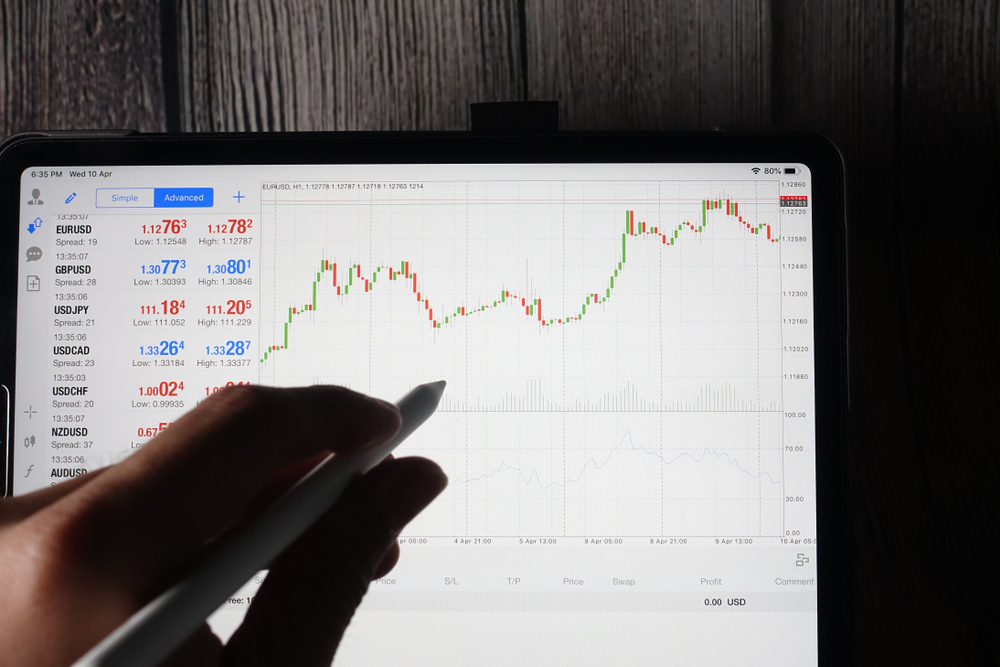
Before committing to any platform, ask yourself some relevant questions as this will aid in choosing the right software that suits your trading needs.
- Does it match your trading style?
- Is the strategy transparent?
- Can you backtest the results?
- Does it offer risk management features?
- Is there a free trial or demo?
Avoid tools that promise guaranteed profits and are based on hype; they always turn out to be red flags and will not do the job.
Final Thoughts
AI stock trading bots and software can genuinely improve how you trade, but only if you use them the right way. They work best as assistants, not replacements for skill, judgment, strategy, or discipline.
The strongest traders don't blindly follow AI signals. They use AI to scan faster, validate ideas, and reduce emotional mistakes, while still making the final decision themselves.
If you're just starting, keep it simple. Learn how each tool works. Start with scanners, alerts, and backtesting before moving into full automation. As your experience grows, combine AI tools with solid risk management, market context, and patience.
Read More: AI Stock Trading Bots: Should You Use Them?
Frequently Asked Questions (FAQs)
Are AI stock trading bots legal?
▼
Yes, AI stock trading bots are legal in most countries, including the U.S., as long as they comply with brokerage and market regulations. The responsibility still lies with you, the trader, to follow trading rules, tax laws, and risk limits. Always use bots through reputable platforms and regulated brokers.
Can beginners use AI trading bots safely?
▼
Beginners can use AI trading bots safely if they start with signal-based or assisted tools, not fully automated systems. Tools that provide alerts, scanners, or strategy suggestions help you learn without risking uncontrolled trades. Full automation should only come after you understand the strategy and risk involved.
Do AI trading bots guarantee profits?
▼
No. AI trading bots do not guarantee profits. They improve consistency and speed, but they still lose money during bad market conditions. Any platform promising guaranteed returns is a red flag. AI works best as a decision-support tool, not a money machine.
What is the best AI trading bot for beginners?
▼
Highly recommended picks: TrendSpider is great for learning technical analysis with automation. Capitalise.ai is ideal for free, beginner-friendly trade automation. TradingView works well if you want flexibility and community-driven strategies. However, the "best" bot depends on your trading style and experience level.
Are AI trading bots better than human traders?
▼
AI bots are better at speed, consistency, and data processing, but humans are better at judgment, context, and adapting to unusual events like breaking news. The most effective traders combine AI tools with human decision-making.
Can AI trading bots trade automatically for me?
▼
Yes, some AI trading bots can execute trades automatically through supported brokers. However, automatic trading carries a higher risk. Beginners should monitor bots closely or start with paper trading before using real money.
How much money do I need to use AI trading software?
▼
Some AI trading tools are free or low-cost, while advanced platforms can cost $50–$300+ per month. You don't need a large account to start, but active day trading platforms often make more sense if your account meets PDT requirements ($25,000+).
Do AI bots work in all market conditions?
▼
No. AI bots perform best in markets that match their strategy. A trend-following bot may struggle in choppy markets, while a breakout bot may fail during low volatility. This is why understanding what strategy the AI uses is critical.
Should I use AI bots for day trading or long-term investing?
▼
Both are possible: Day traders benefit from real-time scanners and momentum signals. Long-term investors use AI for portfolio optimization and rebalancing. Choose a bot that matches your timeframe and risk tolerance.
What's the biggest risk of using AI trading bots?
▼
The biggest risk is blind trust. Traders often assume AI will handle everything and stop monitoring trades. Poor risk management, over-optimization, and ignoring market context can lead to fast losses.
Can AI trading bots replace learning how to trade?
▼
No. AI bots should support your learning, not replace it. Understanding price action, volume, risk management, and market structure is still essential. Traders who rely entirely on bots without understanding the logic usually fail.
AI Trading Bots Trading Software Automated Trading TrendSpider Trade Ideas AI Technology
Frequently Asked Questions
Are AI stock trading bots legal?
Yes, AI stock trading bots are legal in most countries, including the U.S., as long as they comply with brokerage and market regulations. The responsibility still lies with you, the trader, to follow trading rules, tax laws, and risk limits. Always use bots through reputable platforms and regulated brokers.
Can beginners use AI trading bots safely?
Beginners can use AI trading bots safely if they start with signal-based or assisted tools, not fully automated systems. Tools that provide alerts, scanners, or strategy suggestions help you learn without risking uncontrolled trades. Full automation should only come after you understand the strategy and risk involved.
Do AI trading bots guarantee profits?
No. AI trading bots do not guarantee profits. They improve consistency and speed, but they still lose money during bad market conditions. Any platform promising guaranteed returns is a red flag. AI works best as a decision-support tool, not a money machine.
What is the best AI trading bot for beginners?
Highly recommended picks: TrendSpider is great for learning technical analysis with automation. Capitalise.ai is ideal for free, beginner-friendly trade automation. TradingView works well if you want flexibility and community-driven strategies. However, the "best" bot depends on your trading style and experience level.
Are AI trading bots better than human traders?
AI bots are better at speed, consistency, and data processing, but humans are better at judgment, context, and adapting to unusual events like breaking news. The most effective traders combine AI tools with human decision-making.
Can AI trading bots trade automatically for me?
Yes, some AI trading bots can execute trades automatically through supported brokers. However, automatic trading carries a higher risk. Beginners should monitor bots closely or start with paper trading before using real money.
Do AI bots work in all market conditions?
No. AI bots perform best in markets that match their strategy. A trend-following bot may struggle in choppy markets, while a breakout bot may fail during low volatility. This is why understanding what strategy the AI uses is critical.
Should I use AI bots for day trading or long-term investing?
Both are possible: Day traders benefit from real-time scanners and momentum signals. Long-term investors use AI for portfolio optimization and rebalancing. Choose a bot that matches your timeframe and risk tolerance.
What's the biggest risk of using AI trading bots?
The biggest risk is blind trust. Traders often assume AI will handle everything and stop monitoring trades. Poor risk management, over-optimization, and ignoring market context can lead to fast losses.
Can AI trading bots replace learning how to trade?
No. AI bots should support your learning, not replace it. Understanding price action, volume, risk management, and market structure is still essential. Traders who rely entirely on bots without understanding the logic usually fail.